Technical SEO is the foundation that determines whether search engines can find, crawl, and index your content. Without it, your blog posts, product pages, and landing pages might as well not exist. The problem is that most technical SEO audits require expensive tools, manual checklists, or agency retainers.
Claude SEO changes that. It is a free, open-source skill for Claude Code that runs a full technical SEO audit across 9 categories in under 2 minutes. You get a scored report with prioritized fixes, all from your terminal.
What is the /seo technical command?
The /seo technical command is one of 26 sub-skills in the Claude SEO toolkit. It focuses specifically on the infrastructure and configuration aspects of SEO, the things that are invisible to visitors but critical for search engine crawlers.
When you run the command, Claude SEO fetches your homepage, follows internal links, and analyzes your site against 9 distinct technical categories. Each category receives a pass, warning, or fail status along with a numerical score out of 100. The overall technical score is an aggregate of all 9.
/seo technical https://your-site.com
The output is a structured report that includes a category breakdown table, critical issues that need immediate attention, high-priority fixes for the current week, and lower-priority improvements for your backlog.
What do the 9 technical categories cover?
1. Crawlability
Crawlability determines whether search engines can discover and access your pages. Claude SEO checks whether your robots.txt exists, is valid, and is not accidentally blocking important resources. It verifies your XML sitemap exists and is referenced in robots.txt. It also measures crawl depth, flagging important pages that are buried more than 3 clicks from the homepage.
A key part of the crawlability check in 2026 is AI crawler management. Claude SEO audits your robots.txt for directives aimed at 7 known AI crawlers:
| Crawler | Company | Purpose |
|---|---|---|
| GPTBot | OpenAI | Model training |
| ChatGPT-User | OpenAI | Real-time browsing |
| ClaudeBot | Anthropic | Model training |
| PerplexityBot | Perplexity | Search index + training |
| Bytespider | ByteDance | Model training |
| Google-Extended | Gemini training (not search) | |
| CCBot | Common Crawl | Open dataset |
An important distinction: blocking Google-Extended prevents Gemini training use but does not affect Google Search indexing or AI Overviews (those use Googlebot). Blocking GPTBot prevents OpenAI training but does not prevent ChatGPT from citing your content via browsing (ChatGPT-User).
2. Indexability
Indexability covers whether search engines should index your pages and how they handle duplicates. Claude SEO checks for self-referencing canonical tags, conflicts between canonical and noindex directives, near-duplicate content, parameter URLs, www vs non-www consistency, and proper pagination using rel=next/prev or load-more patterns. For multi-language sites, it validates hreflang implementation. The hreflang x-default guide explains fallback selection and reciprocal-set checks in detail.
3. Security
Security has a direct impact on SEO rankings. Claude SEO verifies HTTPS enforcement, SSL certificate validity, and the absence of mixed content. It also checks for 5 critical security headers:
- Content-Security-Policy (CSP) - controls which resources the browser can load
- Strict-Transport-Security (HSTS) - forces HTTPS connections
- X-Frame-Options - prevents clickjacking
- X-Content-Type-Options - prevents MIME type sniffing
- Referrer-Policy - controls referrer information leakage
For high-security sites, it also checks HSTS preload list inclusion.
4. URL structure
Clean, descriptive URLs help users and crawlers understand and share a page. Claude SEO reviews readability, avoidable parameters, duplicate paths, logical hierarchy, redirect chains, unnecessary length, and inconsistent trailing-slash handling. These checks improve maintainability and clarity, but no single URL pattern guarantees rankings.
5. Mobile optimization
Google primarily uses the smartphone crawler for indexing, and pages must remain accessible on mobile devices. Claude SEO checks the viewport, responsive layouts, usable controls, readable text, and horizontal overflow. Its size and spacing checks are usability heuristics, not universal ranking thresholds.
6. Core Web Vitals
Core Web Vitals are Google's page experience metrics. Claude SEO evaluates all three current metrics using the 75th percentile threshold:
- LCP (Largest Contentful Paint) - target under 2.5 seconds
- INP (Interaction to Next Paint) - target under 200ms
- CLS (Cumulative Layout Shift) - target under 0.1
INP replaced FID (First Input Delay) as a Core Web Vital on March 12, 2024. FID was fully removed from all Chrome tools, including CrUX API, PageSpeed Insights, and Lighthouse, on September 9, 2024. If you are still referencing FID anywhere, Claude SEO will flag it.
7. Structured data
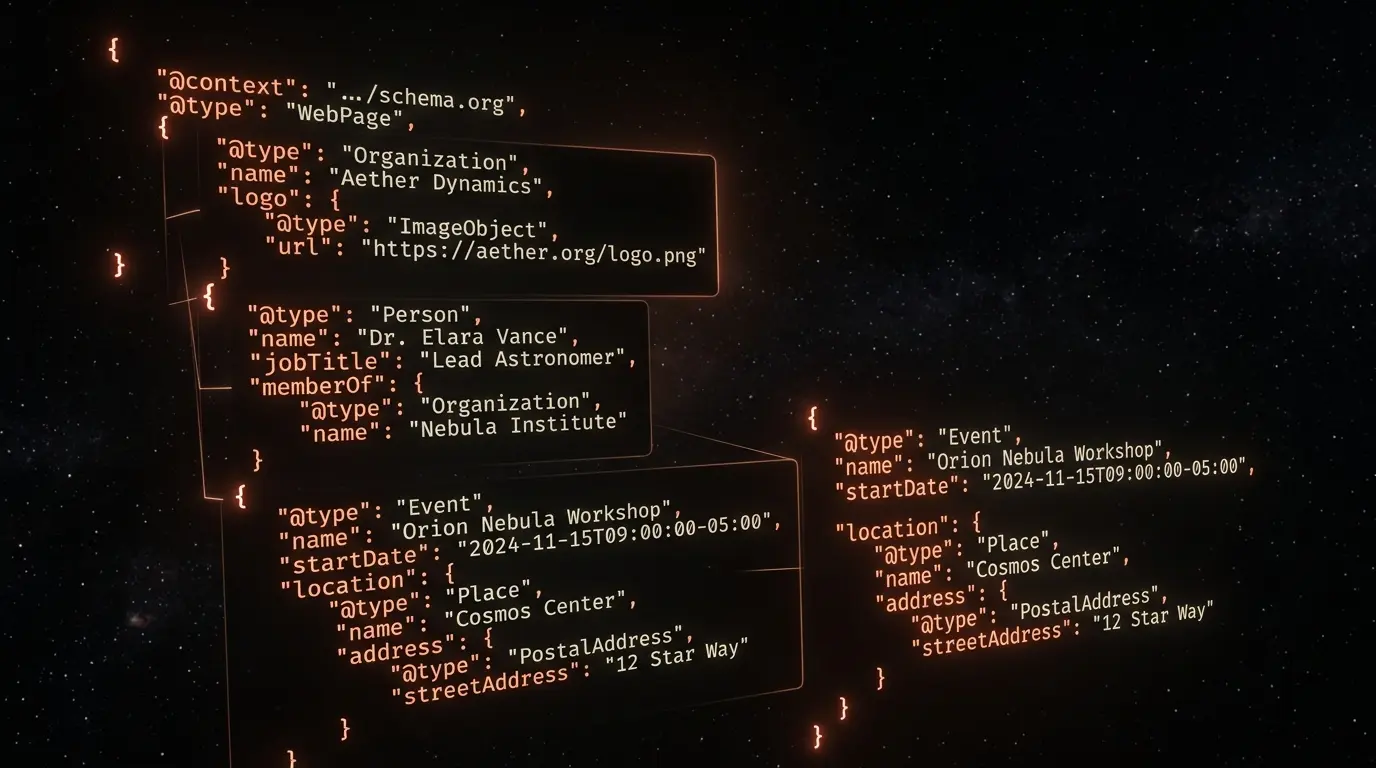
Claude SEO detects three formats of structured data: JSON-LD (Google's preferred format), Microdata, and RDFa. It validates found markup against Google's currently supported rich result types. For a deeper analysis, the dedicated schema markup skill provides generation and validation across 30+ schema types.
8. JavaScript rendering
Many modern websites use JavaScript frameworks like React, Vue, or Angular that render content on the client side. This can cause indexing problems because Googlebot may not execute JavaScript the same way a browser does. Claude SEO identifies whether your content is visible in the initial HTML or requires JS execution. It flags single-page applications and checks for dynamic rendering setups.
Per Google's December 2025 JavaScript SEO guidance: if a canonical tag in raw HTML differs from one injected by JavaScript, Google may use either one. And if raw HTML contains a noindex directive but JavaScript removes it, Google may still honor the noindex from raw HTML. The safest approach is to serve all critical SEO elements in the initial server-rendered HTML.
9. IndexNow protocol
IndexNow enables instant URL submission to Bing, Yandex, and Naver. While Google does not currently support IndexNow, implementing it provides faster indexing on non-Google search engines. Claude SEO checks whether your site supports the protocol and recommends implementation if it is missing.
How do you read the output?
The technical SEO report follows a consistent structure. At the top, you get the overall technical score out of 100. Below that is the category breakdown:
### Technical Score: 82/100

### Category Breakdown
| Category        | Status | Score  |
|-----------------|--------|--------|
| Crawlability    | pass   | 95/100 |
| Indexability    | pass   | 90/100 |
| Security        | warn   | 72/100 |
| URL Structure   | pass   | 88/100 |
| Mobile          | pass   | 95/100 |
| Core Web Vitals | warn   | 68/100 |
| Structured Data | pass   | 85/100 |
| JS Rendering    | pass   | 92/100 |
| IndexNow        | fail   | 0/100  |
Issues are grouped by severity:
- Critical - fix immediately (broken HTTPS, blocked robots.txt, missing canonical tags)
- High priority - fix within 1 week (redirect chains, missing security headers, slow LCP)
- Medium priority - fix within 1 month (URL length, missing hreflang, touch target sizing)
- Low priority - backlog items (IndexNow, HSTS preload, minor CLS issues)
How does this combine with the full audit?
The /seo technical command is a focused deep-dive into infrastructure. For a complete picture, use the full site audit (/seo audit), which spawns up to 17 SEO specialists covering technical SEO, content quality (E-E-A-T), schema markup, AI search readiness, performance, images, and more. The technical SEO agent within the full audit runs the same checks described here.
You can also pair the technical audit with the schema markup skill to generate missing structured data, or use the comparison guide to see how Claude SEO stacks up against traditional tools like Ahrefs and Semrush.
Getting started
The installation takes about 30 seconds:
git clone --depth 1 https://github.com/AgriciDaniel/claude-seo.git
bash claude-seo/install.sh
Then open Claude Code and run:
/seo technical https://your-site.com
That is all for the core workflow. Claude SEO is MIT licensed and has no paid product tier, while Claude Code and optional providers have their own requirements. The public repository showed about 14,200 GitHub stars when this page was reviewed on August 15, 2026.