Claude SEO v2.2.5 was the current public release when this post was published; later releases have since superseded it, including v2.4.0. It builds on the managed runtime introduced in v2.2.4 and hardens the places where an audit can otherwise look complete while missing data. The official public tag resolves to commit 2384fdd.
This is a reliability release, not a new scoring category. The work focuses on packaging the files an installation needs, validating nested structured data, collecting browser evidence through supported interfaces, and keeping dated Google guidance tied to primary sources.
What changed in Claude SEO v2.2.5?
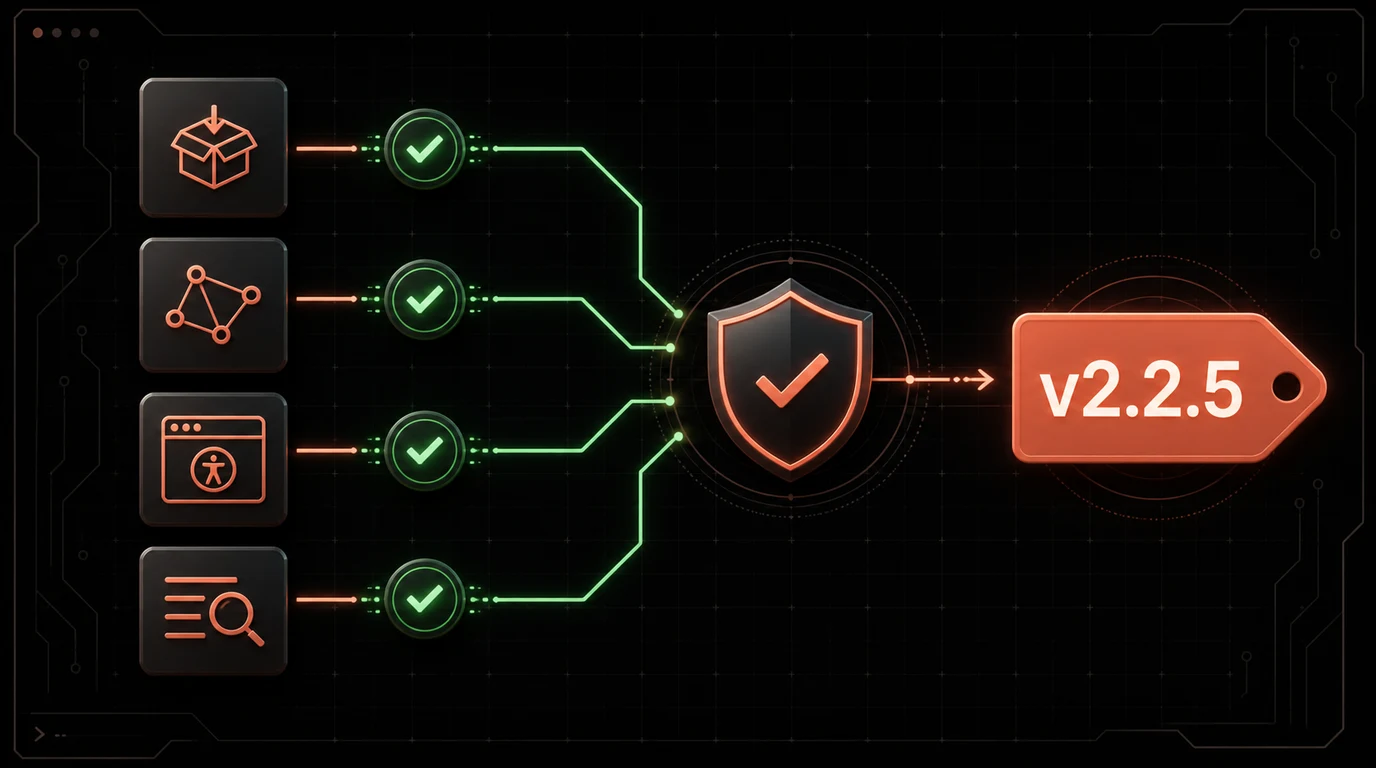
The release notes group the work into four connected reliability paths:
- Installation: both manual installers now include deterministic
data/assets and the splitlxml_html_cleandependency. - Structured data: JSON-LD graph members are traversed and validated, malformed members fail clearly, and ordinary language no longer triggers placeholder false positives.
- Rendered evidence: Chromium accessibility capture uses bounded CDP calls, empty results become unavailable, and partial failures stay explicitly partial.
- Current guidance: the Google update ledger and maintained instructions were refreshed through August 25, 2026.
Installation and runtime fixes
The v2.2.4 runtime model remains in place: plugin installation and dependency provisioning are separate, /seo setup creates the isolated environment, and /seo doctor inspects it without changing state. Version 2.2.5 closes gaps around that model rather than replacing it.
/plugin marketplace add AgriciDaniel/claude-seo
/plugin install claude-seo@agricidaniel-claude-seo
/seo setup
/seo doctor
The manual installers now copy the deterministic update ledger and other required data files. The runtime dependency set includes lxml_html_clean, which modern lxml installations no longer bundle. User-facing script examples now route through claude-seo run so the same managed interpreter and dependency boundary applies across platforms.
The official v2.2.5 installation guide documents plugin, manual, and Windows paths. Python 3.10 or newer, Git, and Claude Code remain prerequisites.
Structured data and browser evidence
JSON-LD graphs
Structured data often groups entities inside @graph. The validator now walks those members, rejects malformed graph entries, and keeps deprecated-type enforcement active inside nested structures. Placeholder detection was narrowed so ordinary prose does not become a false validation failure.
Accessibility and Agent-UX evidence
The renderer now captures the Chromium accessibility tree through bounded Chrome DevTools Protocol calls. Empty evidence is reported as unavailable, while partial browser or accessibility failures remain partial. The audit no longer turns missing browser evidence into a confident zero score.
Complete output by default
Rendered-page JSON is preserved in full by default. An explicit --max-text option applies a measured bound when a caller needs one. Framework markers alone no longer classify a complete server-rendered or statically generated page as an empty single-page application shell.
Google guidance through August 2026
The source ledger now includes Google's completed August 2026 spam update, the user-specific Preferred Sources workflow, and Search Console platform properties for verified social and video accounts. The maintained guidance also corrects merchant schema, review transparency, canonical timing, and AMP claims.
Lighthouse 13.4.1 is the current official release as checked on August 26, 2026. Its package requires Node.js 22.19 or newer, and its release notes enable Agentic Browsing through the PageSpeed Insights API. These are dated tool facts, not ranking promises, and the release keeps that distinction explicit.
How was the release verified?
The public release reports 439 passing tests. Portability checked 33 skills with zero errors or warnings. A fresh exact-tag verification checked 380 files with zero consistency errors or warnings. Post-merge CI, secret scanning, strict plugin validation, and the dependency vulnerability audit passed.
A native Windows PowerShell smoke run was not available. The PowerShell installer is covered by static regression tests, but that is not the same evidence as a real Windows execution.
Official source: Read the Claude SEO v2.2.5 release for the canonical summary and tag.