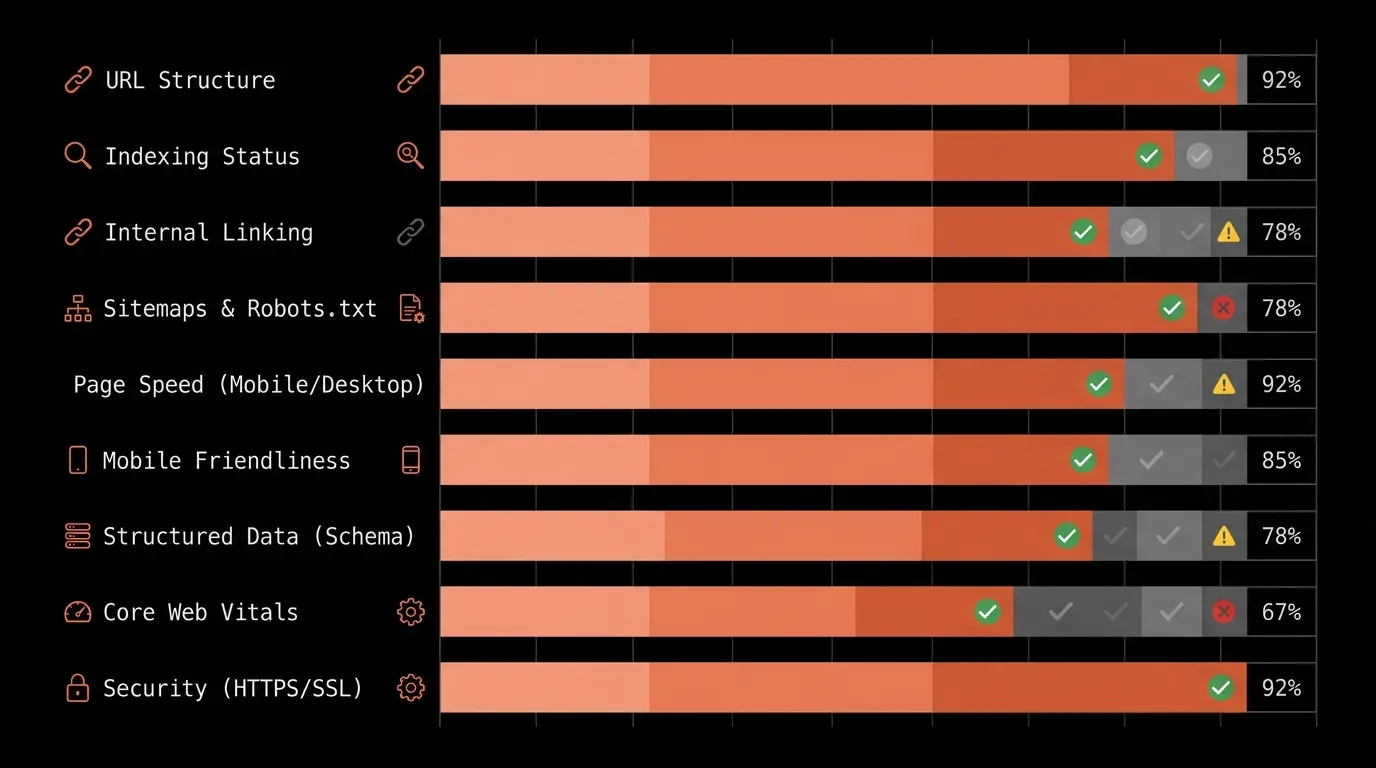
Generative engine optimization is best understood as SEO applied to answer-generating search experiences. The durable work is familiar: publish useful content, make it crawlable and indexable, support claims with evidence, and give people a clear path to the source.
Generative Engine Optimization (GEO) is an industry label, not a separate Google ranking system. Google's official AI features guidance says that AI Overviews and AI Mode use the same SEO foundations as traditional Search. No special markup, AI text file, or AI-only rewrite is required.
Answer-generating search surfaces are worth measuring because they can expose a source in a different interface from a standard result. That does not make volatile audience estimates an optimization recipe. Track the outcomes that matter to your site, including indexed pages, search performance, qualified referrals, conversions, and verified citations.
This guide focuses on practices that can be traced to primary platform guidance. It separates durable requirements from third-party correlations and explains how to use Claude SEO's GEO report without mistaking its internal score for a search-engine signal.
What is generative engine optimization (GEO)?
Generative engine optimization is a convenient name for improving the same content and technical foundations when search products synthesize an answer. A citation is a possible outcome, not something a publisher can guarantee. The page still needs to be accessible, eligible for indexing, relevant to the query, and useful enough for a search system to select.
The interface can change user behavior because a generated answer may satisfy part of the task before a click. The response is measurement, not a separate content formula. Use Search Console for Google performance, analytics for qualified visits, server logs for crawler behavior, and manual spot checks for source attribution.
Third-party citation studies can help form hypotheses, but their samples, prompts, locations, and collection dates vary. Do not convert a correlation into a ranking factor. Google's guidance remains the stronger operational source: meet Search technical requirements, follow spam policies, create helpful content, and make important information available in text.
Use GEO as a reporting lens for AI surfaces, not as permission to replace people-first SEO with a new checklist.
How do AI search engines decide what to cite?
Search and answer systems can retrieve passages and synthesize information, but publishers do not have access to their internal ranking weights. Clear sections, descriptive headings, accurate claims, and primary-source citations help readers and machines understand a page. They are quality practices, not proof of a special citation algorithm.
Some third-party studies report correlations between web mentions and visibility. Correlation does not show that placing a brand name on a particular platform causes citations. Google's guidance explicitly warns against attempts to gain inauthentic mentions. Build reputation through useful products, original work, expert participation, and accurate coverage.
| Evidence level | How to use it |
|---|---|
| Official platform documentation | Use as the primary source for requirements, crawler controls, and supported features. |
| Your first-party data | Use Search Console, analytics, logs, and conversions to judge outcomes for your site. |
| Repeatable external studies | Use to form hypotheses after checking sample, date, query set, and limitations. |
| Vendor scores | Use as review heuristics only. Do not present them as platform signals. |
Different products may show different sources for the same question. That is a reason to measure platforms separately, not a reason to manufacture platform-specific mentions. Keep the underlying page accurate and accessible, then compare observed citations with a repeatable prompt set and a recorded date.
What makes a passage citable?
AI systems prefer passages that are self-contained, meaning they can be extracted and understood without the surrounding context. A citable passage typically contains a clear definition, a specific statistic, or a direct answer to a question. It attributes claims to specific sources. It avoids vague generalities and unsupported opinions.
There is no universal passage-length target published by Google or the major answer engines. Write enough to answer the question completely. Use a short definition when that is sufficient, and use a longer explanation when the subject needs context, evidence, limitations, or examples.
The 5 pillars of GEO optimization
Claude SEO's GEO skill organizes checks into five internal dimensions. The weights are a vendor heuristic for prioritizing review. They are not Google weights, ranking factors, or a prediction that a page will receive a citation.
1. Citability score (25% weight)
Citability is Claude SEO's label for whether a section states a clear, supportable answer. It is useful for editorial review, but no platform publishes a citability score or identifies it as the single most important factor.
Strong citability signals:
- Clear, quotable sentences with specific facts and statistics
- Self-contained answer blocks that can be extracted without surrounding context
- A direct answer near the point where the question is introduced
- Claims attributed to specific sources (studies, official documentation, data)
- Definitions following "X is..." or "X refers to..." patterns
- Unique data points that cannot be found elsewhere
What weakens a section: vague statements, opinions presented as facts, claims without evidence, and conclusions separated from the context needed to understand them. Fix these problems for readers first.
Use an answer-first structure when it fits the query: state the conclusion, explain the evidence, and cite the source. Do not pad or cut a section to hit a fixed word window. Google explicitly warns against writing to a target word count instead of satisfying the reader.
2. Structural readability (20% weight)
Descriptive headings, lists, and tables make complex material easier to scan and can clarify relationships in the HTML. Use them when they improve comprehension, not to manufacture a pattern for a crawler.
Strong structural signals:
- Clean H1 to H2 to H3 heading hierarchy with no skipped levels
- Question-based headings that match natural query patterns (e.g., "What is GEO?" instead of "GEO Overview")
- Short paragraphs of 2-4 sentences maximum
- Tables for repeated comparisons and exact mappings
- Ordered lists for step-by-step processes
- Unordered lists for multi-item features or criteria
- FAQ sections with clear question-and-answer formatting
Long, unstructured passages make important information harder for people to locate. Break a section when the topic changes, and use a heading that accurately describes the content below it.
3. Multi-modal content signals (15% weight)
Images, diagrams, video, and interactive tools can improve a page when they explain something the prose cannot show as clearly. There is no universal citation uplift that applies to every page or platform, so judge media by usefulness and accessibility.
What to include:
- Text paired with relevant images (not stock photos, but diagrams, charts, screenshots)
- Embedded or linked video content
- Infographics and data visualizations
- Interactive elements such as calculators or tools
- Structured data (schema markup) that supports media elements
The key word is "relevant." Decorative images do not help. A chart that visualizes the data you are discussing in the text does help. A video walkthrough that demonstrates the process you are describing helps. Media should reinforce the text, not decorate it.
4. Authority and brand signals (20% weight)
Source credibility depends on the topic and the claim. Make authorship, responsibility, evidence, and correction paths clear. Do not assume that a mention count or profile on another platform is a substitute for accurate content and earned reputation.
Strong authority signals:
- Author bylines with verifiable credentials
- Publication dates and last-updated dates on every page
- Citations to primary sources (research studies, official documentation)
- Organization credentials and affiliations
- Expert quotes with proper attribution
- Accurate third-party coverage earned through useful work
- Relevant professional profiles where readers can verify expertise
What hurts trust: unclear authorship, misleading dates, unsupported claims, hidden conflicts, and no way to verify or correct important information. Add only the identity and date signals that are truthful and useful.
5. Technical accessibility (20% weight)
Technical accessibility is foundational. A blocked, non-indexable, or unavailable page cannot participate normally in search. Rendering and crawler controls are more nuanced than a single binary score, so test the HTML and the relevant user agents directly.
Do not assume every crawler has the same rendering capability. Google processes JavaScript, while other search and assistant crawlers publish different controls and capabilities. Keep essential content in accessible HTML when practical, use progressive enhancement, and verify rendered output instead of relying on a blanket claim.
Technical checklist:
- Server-side rendering: Content must be present in the initial HTML response, not injected by JavaScript after page load
- Crawler policy: Decide which search, user-request, and training crawlers fit your publishing policy, then test the relevant robots.txt rules
- Canonical and indexability: Keep the preferred URL explicit and avoid accidental noindex or blocking directives
- Visible evidence: Keep important claims and source links available in the page content
| Crawler | Owner | Purpose |
|---|---|---|
| GPTBot | OpenAI | Model training control |
| OAI-SearchBot | OpenAI | OpenAI search features |
| ChatGPT-User | OpenAI | ChatGPT browsing |
| ClaudeBot | Anthropic | Claude web features |
| PerplexityBot | Perplexity | Perplexity AI search |
| CCBot | Common Crawl | Training data (often blocked) |
Recommendation: Follow each provider's current crawler documentation. OpenAI's bot documentation separates OAI-SearchBot, GPTBot, and ChatGPT-User because they serve different purposes. Robots.txt decisions should reflect your search and training policy rather than a copied allowlist.